

Understanding
School-Related Anxiety
in Adolescents
Understanding the challenges young people face at school, recognising emotional distress, and exploring how appropriate assessment, individualised care, and family support may contribute to better mental well-being.

Patient Privacy & Confidentiality
To protect patient privacy and confidentiality, the patient’s name, parents’ or guardians’ names, and all identifying details used in this illustrative case study are fictional. The names and circumstances described are hypothetical and do not represent an actual patient treated by Dr. Mohammad Shibli Sadiq. Any resemblance to real individuals or actual cases is purely coincidental. This case study is intended for general educational purposes and should not be interpreted as a report of actual clinical findings or an individual treatment outcome. Clinical Profile & Professional Credentials

This Educational Case Study is Prepared for Clinical Review by
Dr. Mohammad Shibli Sadiq
Assistant Professor of Psychiatry
National Institute of Mental Health (NIMH), Dhaka, Bangladesh
Department of Child, Adolescent & Family Psychiatry

Case Overview
Case Theme: School-Related Anxiety in an Adolescent
Illustrative Patient: Ayaan — a fictional name Age: 15 years Educational Background: Secondary-school student Primary Concern: Persistent worry associated with academic
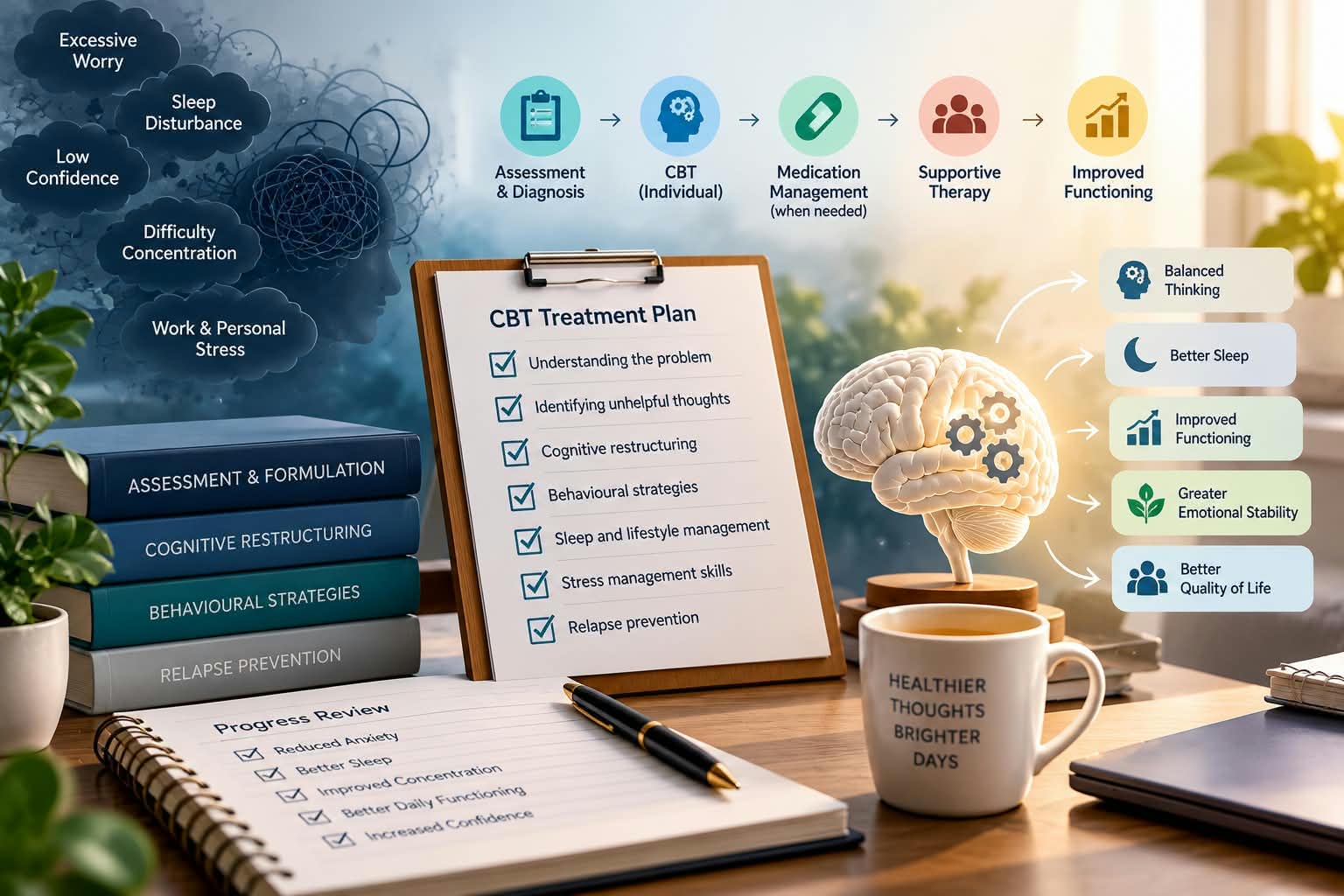
Managing Anxiety Through Individual Cognitive Behavioural Therapy (CBT)
Case Theme: School-Related Anxiety in an Adolescent
Mr. Rahman presented with persistent anxiety, excessive worrying, and difficulties managing everyday responsibilities. His symptoms affected his sleep,

Clinical Assessment
A comprehensive psychiatric assessment explores emotional well-being, academic and social functioning, sleep, family and environmental context, developmental history, and safety concerns.

Individualised Care Plan
A tailored plan may include psychoeducation, psychological support, healthy daily routines, parent guidance, and psychiatric management where clinically indicated.

Family Involvement & Support
Family support plays an important role in an adolescent’s emotional well-being, academic success, better communication, realistic expectations, and a supportive home environment.

Progress Monitoring & Follow-up
Follow-up focuses on changes in anxiety, sleep, academic functioning, confidence, family communication, and ongoing care needs.

Key Takeaways for Parents & Caregivers
Practical guidance for recognising distress, supporting healthy routines, and seeking professional help when needed.

When to Seek Professional Help
Signs that a psychiatric assessment may be helpful and when urgent support is needed.
More Educational Case Studies
View All Case Studies
Managing Exam-Related Stress in a School Student
Adolescent Mental Health
Supporting a Child with Attention Difficulties
Child Mental Health